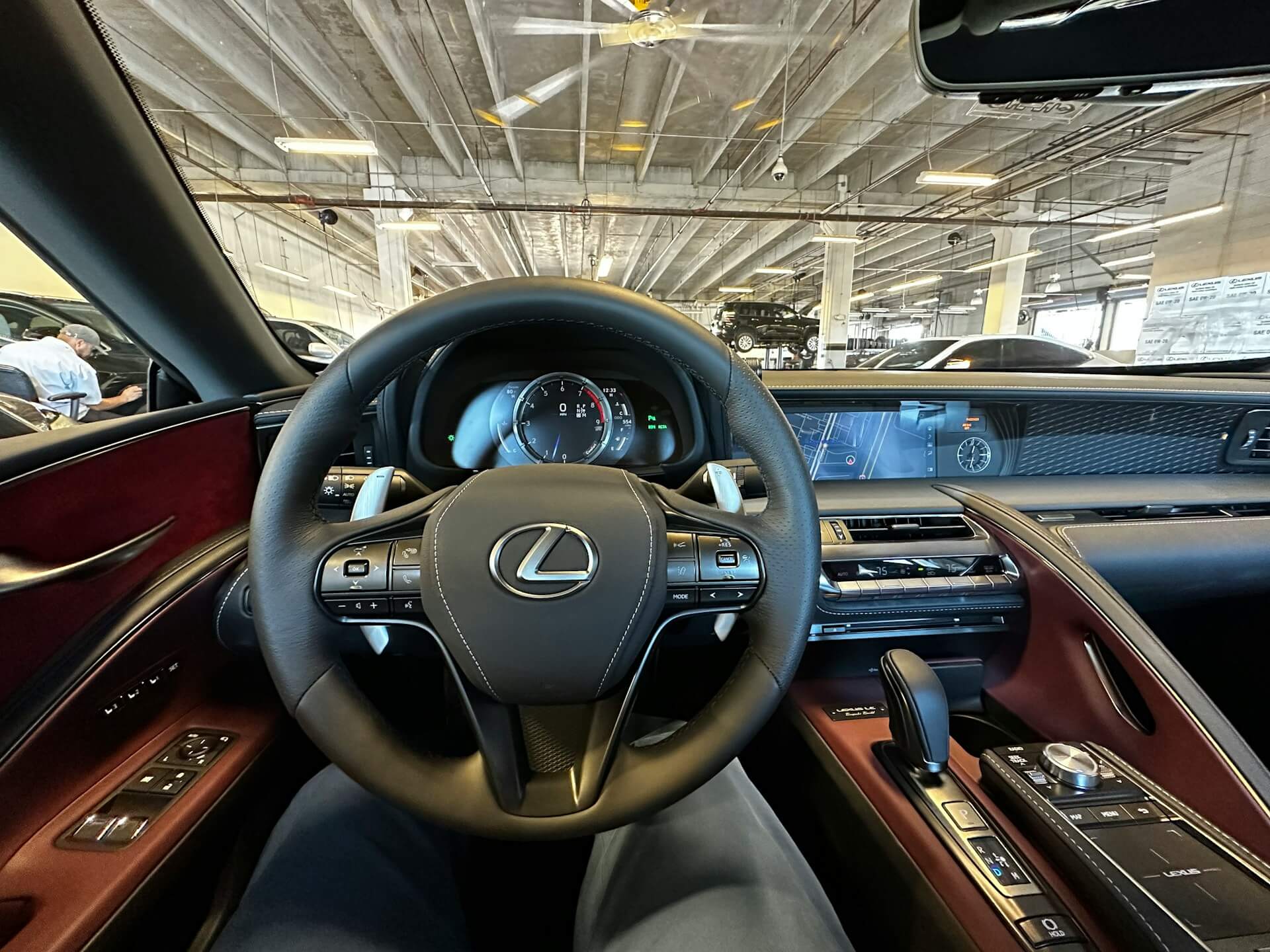
The cars of today are safer, easier to drive and more efficient than ever before – and it’s all thanks to technology. Over the past few decades, cars have evolved massively; increasingly stringent emissions and safety standards have had a transformative effect on the way cars look and perform, while consumer demand has led to the introduction of feature-packed infotainment systems and convenience features like keyless go.
Technology has revolutionised the way we drive and redefined what we look for in a car. Nowadays, we don’t just expect our cars to get us from A to B: we expect them to do it safely and comfortably, and we expect to be entertained along the way.
But how did we get to this point? Which technologies should you look out for in your next car? What’s around the corner? We’re going to be answering all of these questions and more below, covering the evolution of automotive technology, current trends and our predictions for the future.
First, a little history…
It’s hard to get your head around just how far cars have come since the early days. Over the last century and a half, the automobile has been completely and utterly transformed – and we’re going to cover some of the key moments below.
1886: Where it all started
When Karl Benz first unveiled his Patent-Motorwagen to the world, he sparked a revolution in personal transport. Admittedly, it was a slow-moving revolution – he only sold 25 of them. Nevertheless, Benz paved the way for what was to follow, proving the concept of the motor car and demonstrating what was possible.
1908: Mass production begins
The arrival of the Ford Model T in 1908 was significant, but not because of the car itself. What made the Model T revolutionary was the way it was produced. Henry Ford was the first to pioneer the use of an assembly line, reducing production costs and making the car much more affordable.
1930: The birth of infotainment
As cars became more luxurious and more capable, motorists started making longer journeys – and they started getting a little more bored and restless behind the wheel as a consequence. They wanted some kind of entertainment. In 1930, the world’s first commercially available car radio was introduced, laying the foundations for today’s infotainment systems.
1953: Air conditioning arrives
The Chrysler Imperial was the first car to be offered with air conditioning, albeit as an (expensive) optional extra.
1959: Seatbelts are invented
Here’s where Volvo gets its reputation for safety. In 1959, it created the world’s first seatbelt, opting to let other car manufacturers use the patented design for free. Six years later, the UK Government made it compulsory for all new cars to be fitted with them, a decision that’s since saved thousands of lives.
1966: Jensen introduces ABS
British car manufacturer Jensen was the first to launch a car with an anti-lock braking system (ABS). The FF, launched in 1966, was also the first performance car to use a permanent four-wheel drive system.
1975: Catalytic converters become widespread
Manufacturers had been experimenting with catalytic converters since the ‘50s, but it wasn’t until 1975 that they became compulsory on new vehicles sold in the US, reducing exhaust emissions significantly. The UK only mandated them on petrol cars in 1993, following the introduction of Euro 1 emission standards.
1987: Airbags become standard on selected models
Although airbags have been around since the early 1950s, it took a while for them to catch on. In 1987, manufacturers like Porsche and Honda began fitting them to selected models as standard.
1994: Sat-nav arrives in Europe
The E38 BMW 7 Series was the first car sold in Europe with a satellite navigation system. Incidentally, it could also be optioned with an onboard telephone, in-dash TV, parking sensors and much more besides.
The latest new car technology explained
All of that brings us nicely onto the cars of today. With more than a century of technological development behind them, modern vehicles are packed with features that make each and every journey easier, safer and more enjoyable. Here are some popular features you might want to look out for when shopping for your next car.
- Autonomous capabilities: Features like autonomous emergency braking (AEB) have been proven to save lives, applying the brakes automatically to avoid a collision. Some cars are fitted with more advanced systems, which are capable of taking control of the car’s accelerator, brake and steering for short periods of time. Tesla’s Autopilot system is a prime example of this.
- Infotainment systems: These vary significantly from manufacturer to manufacturer, but most now come with some form of mobile phone connectivity (either via an auxiliary port or Bluetooth). Look out for features like Apple CarPlay and Android Auto, which seamlessly integrate your phone apps into your car’s digital display. Choosing a song or navigating to your next destination can then be done through your car’s screen – you won’t even need to pick your phone up.
- Keyless entry and keyless go: Many modern cars feature keyless entry or keyless go. The former allows you to access the car provided the key is in your pocket, while the latter also allows you to drive away without the need to get your key out or put it in the ignition – handy when you’ve got your hands full.
- Heated, cooled seats: The next step up from climate control. Why wait for your car to warm up or cool down when you can get comfortable in seconds with a heated or cooled seat? Many manufacturers offer heated steering wheels too.
- 5G capability: Although the 5G network isn’t being fully utilised yet, it’s expected to revolutionise the way we drive and prove instrumental in the rollout of fully autonomous vehicles (more on that later). Choosing a 5G-connected car will allow you to take full advantage of any future safety advancements and enjoy high-speed web browsing and video streaming while on the move.
- Head-up displays: They’ve been around for a while, but head-up displays (HUDs) are now becoming more and more popular in modern vehicles. They project essential information – like speed and range – onto your car’s windscreen, meaning you no longer need to take your eyes off the road.
- Built-in dashcams: A dashcam can save you an enormous amount of hassle should you get into an accident, and some vehicles now come with them built-in.
- Voice control: If you’re a fan of Siri or Alexa, you’ll love having voice control in your car. The technology is nothing new, but modern systems are a whole lot better than they used to be, allowing you to quickly and easily make calls or send texts on the go.
- Rear seat entertainment: ‘Are we nearly there yet’? You won’t hear those words any more if you choose a car with built-in rear-seat entertainment. From streaming video to playing games, your kids won’t be short of things to do!
- Wireless device charging: Wave goodbye to unsightly cables with wireless charging. When you arrive at your destination, your phone or tablet will be fully charged and ready to go.
- Pre-entry climate control: The latest electric cars allow you to preheat or pre-cool the cabin remotely – ideal for icy morning commutes or late afternoon drives in the baking hot sun. With pre-entry climate control, you’ll be able to get comfortable right away.
- 360° cameras: See exactly what’s going on around your car and park more easily in tight spaces with a 360° camera. These systems generate a digital bird’s eye view of your car, allowing you to manoeuvre with ease.
What’s around the corner?
So, we’ve covered the history of automotive tech. We’ve covered the features available on modern cars. But what about the future? What can we expect to see over the next decade? Here are a few of our predictions…
Augmented reality
We’ve seen head-up displays become more and more popular in recent years, but we expect them to gradually make way for augmented reality systems. Currently, HUDs only tend to display basic information like the vehicle’s speed and range – but this is likely to change significantly over the next decade or so.
Augmented reality systems could make driving easier and safer, providing the driver with additional information on traffic conditions, real-time directions and updates on the status of their car. We expect these systems to become advanced enough that drivers will rarely need to take their eyes off the road: everything they need to know will be projected right onto the windscreen itself.
Fully autonomous vehicles
We’ve already seen the arrival of Tesla’s Autopilot system and, thanks to advancements in machine learning tech, it won’t be long before fully autonomous vehicles hit the showrooms. Tesla Autopilot is currently classified as a Level 2, partially autonomous system, but Level 3 vehicles are trickling onto the market and Level 4 models are currently undergoing testing. The ultimate goal is Level 5 autonomy – vehicles that don’t require any human intervention.
5G connected cars
As we touched on earlier, 5G connectivity is already a thing – a number of manufacturers offer vehicles with built-in 5G capabilities. But as time goes on, we expect these capabilities to be better utilised; cars will be able to talk to their surroundings and to one another, improving safety, making driving easier and paving the way for Level 5 autonomy.
New ways of charging electric cars
Range anxiety is still a thing. But what if charging became seamless? What if you no longer had to plug your car into the grid? A number of manufacturers are currently working on wireless charging tech, which could be just the kind of breakthrough that’s required in order to consign range anxiety to the history books once and for all.
Improved battery technology
Even if wireless charging doesn’t pan out, improved battery tech should – in theory – spell the end of range anxiety. The likes of graphene and solid-state batteries won’t just extend an EV’s range beyond the 500-mile mark, they’ll be much more sustainable than the current lithium-ion cells we’re used to – and they could slash charging times to just two or three minutes.
Synthetic fuels
Even though petrol and diesel cars will no longer be available to buy new in a decade or so, they won’t be fully left behind. Synthetic fuels will offer a more sustainable, more environmentally friendly alternative to fossil fuels, allowing classic car owners to continue enjoying their vehicles for decades to come. Although EVs look set to dominate our roads in the future, internal combustion won’t totally disappear.
Check out our car lease deals today
Compare Car Leasing Deals
www.cars2buy.co.uk
There you have it, our round-up of the latest automotive technology – and a look ahead to what may be around the corner. If you’re in the market for a new car that’s loaded with tech, you’ll be spoilt for choice here at Cars2Buy.
We make it easy to compare new car leasing deals from top-rated dealerships across the UK. Browse by make and model, hit search and find a deal that works for you. It’s never been simpler to find your next car.
92% of our customers recommend us. So, if you want to shop for your next car the easy way, explore our range of new car deals today.